 0113 249 2222


Quick Design Guide
Shaker wall panelling can be installed in full-height grids, half-height frames, feature panels or modern narrow-box layouts. The best layout depends on ceiling height, wall width and the style of the room. Consistent spacing, symmetry and clean alignment are the key principles for achieving a professional finish.
Understanding Shaker Panel Proportions
Before choosing a layout, measure the wall height and width. Balanced proportions are critical. Boxes that are too tall or too narrow can look unbalanced.
As a general guide:
- Standard ceilings (2.3m – 2.4m): medium rectangular panels work well.
- High ceilings: taller vertical panels create elegance.
- Narrow walls: fewer, wider panels prevent overcrowding.
Always sketch the design before installation to confirm symmetry.
Full-Height Grid Layout
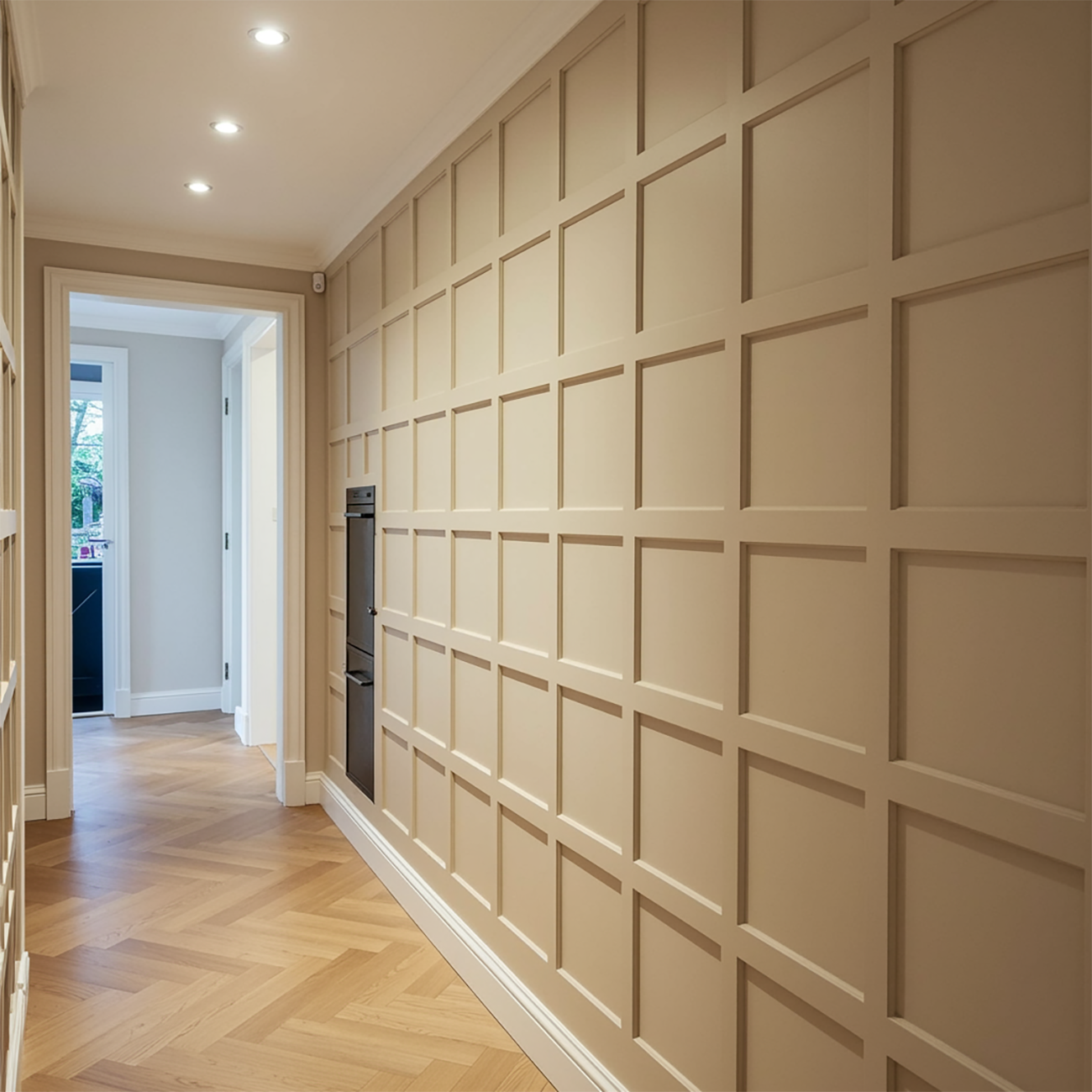
A full-height grid covers the entire wall from skirting to ceiling. This layout works particularly well in living rooms and bedrooms where a bold feature wall is desired.
Best suited for:
- Modern interiors.
- Media walls.
- Large open spaces.
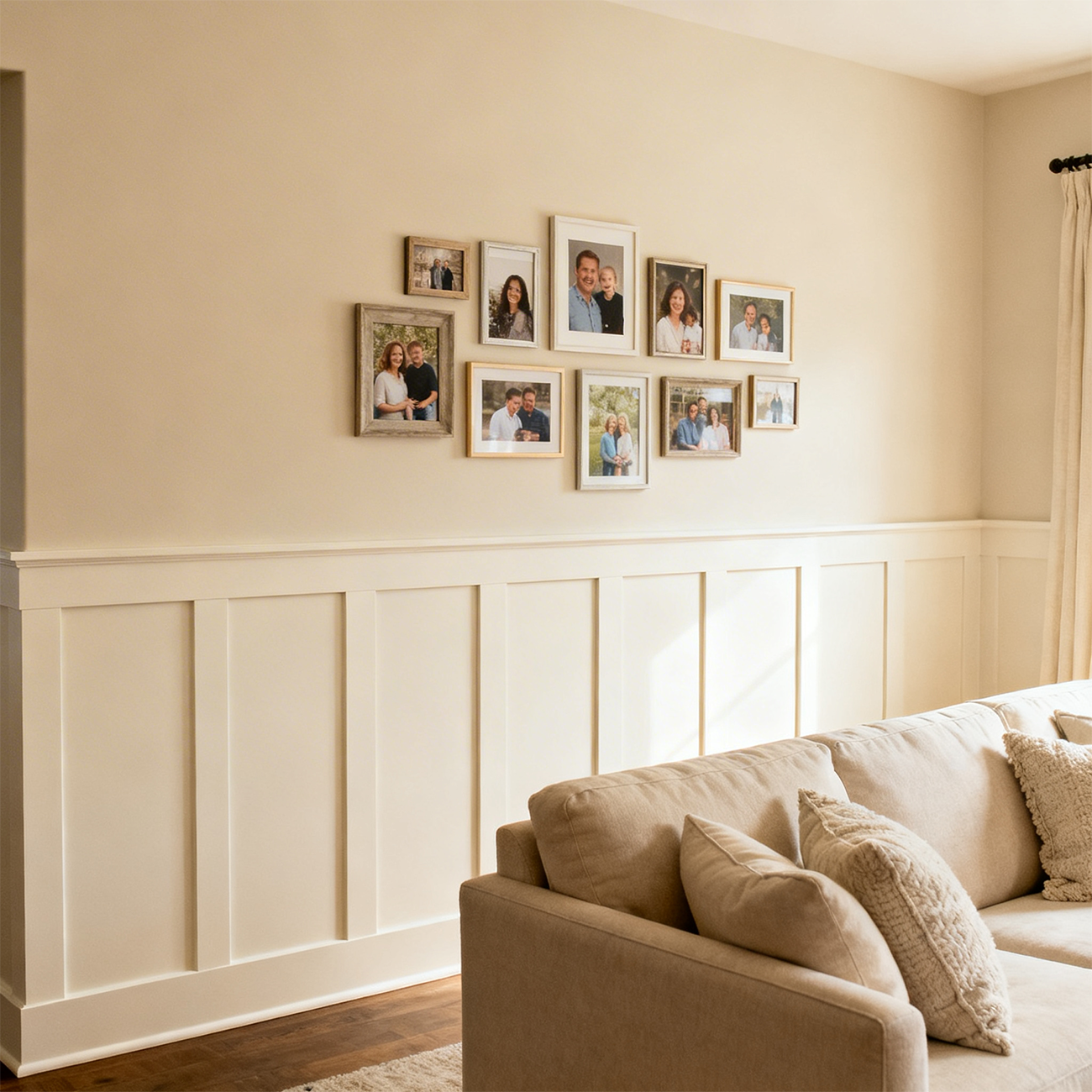
Half-Height (Wainscoting Style) Layout
Half-height shaker panelling typically runs to one-third or half the wall height. It is often finished with a horizontal top rail.
Best suited for:
- Hallways.
- Staircases.
- Dining rooms.
This style creates a classic, timeless look.
Feature Frame Layout
Feature frames involve creating one or two large rectangular panels centred on the wall. This layout works well behind beds, sofas or desks.
Best suited for:
- Bedrooms (headboard walls).
- Home offices.
- Small accent areas.
Modern Narrow Box Layout
This style uses thinner MDF strips and closer spacing to create more numerous, smaller rectangles. It gives a contemporary appearance and works well with darker paint colours.
Best suited for:
- Contemporary interiors.
- Statement walls.
- Media rooms.
Floor-to-Dado Layout
This layout extends from floor level to a dado rail height (typically 900mm – 1200mm). It adds protection and architectural detail without overwhelming the room.
Best suited for:
- Hallways.
- Period-style homes.
- Transitional spaces.
Spacing & Symmetry Tips
- Keep panel widths consistent.
- Centre the design on the wall.
- Use a level to maintain straight lines.
- Measure multiple times before fixing.
- Consider plug sockets and switches during layout planning.
Symmetry is often more important than strict measurements.
Choosing Strip Thickness
- 9mm MDF creates a subtle, modern finish.
- 12mm MDF creates a deeper shadow line and more traditional appearance.
- Thicker strips create stronger visual depth but require careful alignment.
Paint Colour & Finish Ideas
- Light colours create a clean, airy effect.
- Dark colours create drama and highlight the panel structure.
- Matching wall and panel colour creates subtle architectural detail.
- Contrasting colours create a bold design statement.
Common Design Mistakes To Avoid
- Uneven spacing.
- Ignoring ceiling height proportions.
- Installing without planning around sockets.
- Choosing strip thickness too heavy for small walls.
- Overcrowding narrow spaces with too many panels.
Why Pre-Cut MDF Shaker Kits Help
Pre-cut MDF shaker panel kits ensure consistent strip width and thickness, reducing layout errors. They help achieve clean alignment and speed up installation time.
Frequently Asked Questions
How do I decide panel spacing?
Spacing should be evenly distributed across the wall. Divide the total width by the number of intended panels to maintain symmetry.
Should shaker panels reach the ceiling?
Full-height designs create a bold effect, while half-height designs offer a traditional appearance.
Can I mix layout styles?
Yes, but consistency within each wall is important for a professional look.
Useful Guides
- MDF Shaker Panel Kits.
- How to Install Shaker Panelling.
- Shaker Panel Buying Guide (MDF vs Timber).
- Shaker Panel Layout Ideas & Design Guide.
- MDF Sheet Cut-to-Size.